Spring 2026 was the first operational administration of the NJSLA-Adaptive (NJSLA-A), New Jersey's computer-adaptive test in English language arts and mathematics. (It replaced the fixed-form NJSLA; the longer history is in From PARCC to Adaptive: A Decade of Change in New Jersey State Testing.) This article is about the practical side: what changes for students on test day, for the teachers who prepare them, and for the school leaders who have to explain the results.
It covers the NJSLA-A only. The graduation test, the NJGPA-Adaptive (NJGPA-A), is a different test with its own schedule and its own two performance levels, and it is not discussed here.
What changes for students
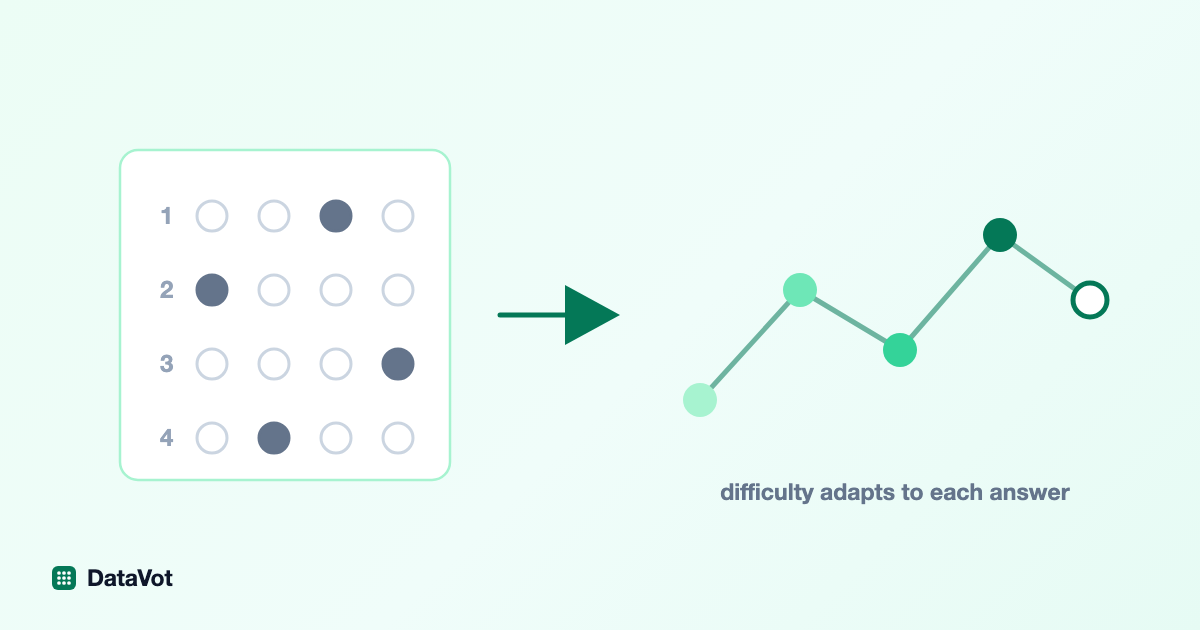
The test adjusts difficulty after each group of questions rather than after every answer. How that works is covered in How the NJSLA-Adaptive Algorithm Decides. According to the NJDOE FAQ, the design gives students "questions closer to their current level," which the department says can reduce testing anxiety and encourage confidence and focus.
Three details from the FAQ change how students should be prepared:
- Every question must be answered before moving on. Because the test adapts to performance, the FAQ tells students to make their best effort on each item. Answers can be changed within a session, but answered items will not readapt, so rushing through with a plan to return later works against the student.
- The writing task is not adaptive. Each student completes one extended writing task. The type of task (opinion or argumentative, informative or explanatory, or narrative) depends on grade level.
- The practice tests are for the platform, not for content. NJDOE describes the free practice tests as a way to learn the navigation, item formats and tools, not as content preparation.
For testing times and units, see NJDOE's unit testing times page.
Fairness and grade-level scoring
A common worry is that adaptive testing lowers the bar for students who struggle. The FAQ answers it directly: everyone is tested on the same standards, the difficulty adjusts but the content does not, all items are pretested and calibrated, and "only grade-level items count toward the score." That last point matters when a parent asks whether an easier set of questions means an easier test. It does not change what the score measures.
Accommodations carry over. The FAQ says the supports available are consistent with those on the prior NJSLA, and that every accommodation except the paper test works within the adaptive test. A student on the paper version takes a non-adaptive form.
Results timing in the first year
The first year is slower, not faster. Before any NJSLA-A score could be reported, the state had to set new performance standards and cut scores and have them approved by the State Board. The FAQ lists Spring 2026 NJSLA-A results for fall 2026. They had not been released when this article was written.
For later administrations the FAQ lists Spring 2027 NJSLA-A results for June 30, 2027. Check the FAQ for the current schedule rather than relying on any date repeated here, including ours.
Plan this year's staff and family communication around that gap. Teachers will start the year without last spring's results, and families will get individual reports later than usual.
What teachers get back
NJDOE says NJSLA-A score reports are designed to show how well a student demonstrated grade-level knowledge and skills, and they report both an overall performance level and results by reporting category. The reporting categories are the part most useful to a teacher. Each one is a group of related skills (under Reading, for example, Reading Literary Text, Reading Informational Text and Language), and NJDOE's NJSLA Score Interpretation Guide says each is reported as Below Expectations, Near or Within Expectations or Above Expectations. The categories for every grade and course are listed in the ELA and mathematics blueprints.
These results have limits, and NJDOE states them. The FAQ says the NJSLA-A determines grade-level proficiency and is "not designed for frequent progress monitoring or instructional adjustments." Classroom diagnostics given several times a year do that job. The test is given once a year, and NJDOE describes it as "a one time 'snapshot' of student performance" to be combined with local assessments, classroom work and teacher observation.
In practice, reporting categories are best read across a group of students, not as a verdict on one child. A pattern across a grade, such as many students Below Expectations in the same category, is worth a curriculum conversation. For one student, a single category is a question to check against classroom evidence.
What changes for school leaders
- Trend lines break at 2026. NJDOE's standard-setting presentation states that the new test "introduces a new scoring scale" and that prior fixed-form cut scores "no longer apply". Present 2026 results as the start of a new series, not the next point on the old line.
- Growth is still calculated. The FAQ says median Student Growth Percentiles can still be calculated for 2025–2026, because growth compares a student with academic peers rather than subtracting one year's score from another. The details are in Student Growth and the New Scale.
- The 30-day rule for families still applies. The FAQ restates N.J.A.C. 6A:8-4.3(b): districts must provide results, usually individual student reports, to parents and guardians within 30 days of receiving them from NJDOE. NJDOE publishes sample cover letters for mailing NJSLA-A individual reports.
What to do before the results arrive
Have three conversations now rather than in the week the reports land. Tell students and families that each question must be answered before moving on and that the practice tests are for learning the platform. Tell teachers that reporting categories describe groups of skills, marked Below, Near or Within, or Above Expectations, and are read best across a class. And settle, before anyone builds a slide, that 2026 NJSLA-A results start a new series rather than continue the old line.
Related reading: Is the NJSLA-Adaptive a Better Test? · From PARCC to Adaptive: A Decade of Change in New Jersey State Testing